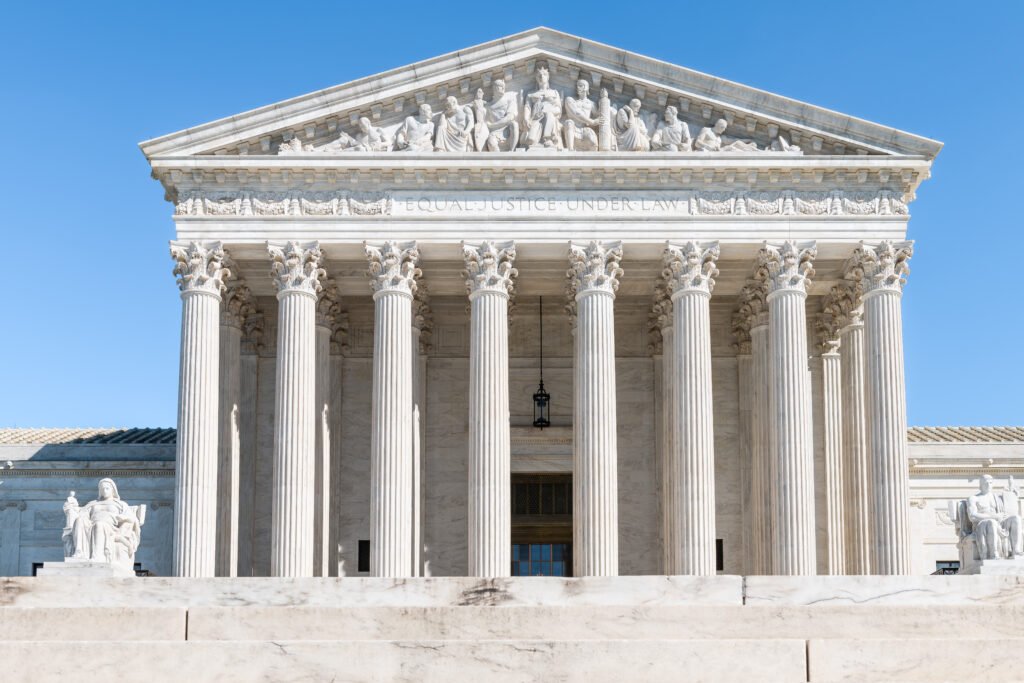
Supreme Court accepts AI copyright case before 2027?
BUY YES
- Cost
- 10.0¢
- Implied chance
- 10.0%
- Return if right
- 900.0%
- Spread cost
- 6%
If you put in $100
You get 1000.0 shares at 10.0¢ each.
YES wins: $1000.00 back, a profit of $900.00. YES loses: $0.00, and the whole $100 is gone.
The gap between buyers and sellers takes $52.63 of that profit. Without it you would make $952.63.
Assumes the whole order fills at this price. A large order eats into the book and averages worse.
Buy YES on Polymarket
BUY NO
- Cost
- 91.0¢
- Implied chance
- 91.0%
- Return if right
- 9.9%
- Spread cost
- 6%
If you put in $100
You get 109.9 shares at 91.0¢ each.
NO wins: $109.89 back, a profit of $9.89. NO loses: $0.00, and the whole $100 is gone.
The gap between buyers and sellers takes $0.61 of that profit. Without it you would make $10.50.
Assumes the whole order fills at this price. A large order eats into the book and averages worse.
Buy NO on Polymarket
Latest news
headlines link to their publishers- Supreme Court wrestles with fight over Air Force munitions-disposal site on GuamThe Washington Post · 4h ago
- What the Supreme Court has said about survivors of botched executionsABC News · 5h ago
- US Supreme Court hears challenge to air force UXO detonations in GuamAl Jazeera · 6h ago
- Supreme Court weighs case over Air Force detonating munitions in GuamThe Hill · 7h ago
- Supreme Court wrestles with Boulder’s climate lawsuit against fossil fuel companiesThe Hill · 8h ago
- Listen live: Supreme Court takes up Guam WWII munitions disputeThe Hill · 11h ago
Headlines are matched on the names in “Supreme Court accepts AI copyright case before 2027?”. Nobody checks them by hand, so one may not be relevant. They also say nothing about whether the price has already moved on this news.
How this market resolves
This market will resolve to "Yes" if the Supreme Court of the United States grants certiorari in a case concerning artificial intelligence and United States copyright law by December 31, 2026, 11:59 PM ET. Otherwise, this market will resolve to "No". A case qualifies if at least one of its claims or defenses, as described in the petition for certiorari or in the lower court's decision under review, concerns any of the following: (1) whether using copyrighted works to train, develop, or fine-tune an artificial intelligence model infringes copyright or is fair use; (2) whether outputs generated by an artificial intelligence model infringe copyright, or who is liable for such infringement; (3) whether works created in whole or in part by an artificial intelligence system are eligible for copyright protection, or who may be their author; or (4) any other claim under Title 17 of the United States Code, including the Digital Millennium Copyright Act, that arises from the training or development of an artificial intelligence model or from its outputs. An artificial intelligence model means any system that learns from data or generates content, including machine-learning and generative AI models such as large language, image, audio, and video models; the petition or decision does not need to use the words "artificial intelligence" or "AI". A grant limited to a procedural, jurisdictional, or remedial question in a qualifying case will count. A case in which an artificial intelligence developer is a party but no claim or defense concerns the matters listed above will not qualify. Granting certiorari means an order granting a petition for a writ of certiorari, including certiorari before judgment. An order that grants certiorari, vacates the lower court's judgment, and remands without further review (a GVR order) will not qualify. Denials of certiorari, orders inviting the Solicitor General to file a brief, relisting of a petition, and rulings on emergency applications or stays will not qualify. A qualifying case does not need to be pending before the Court at the time this market is created, and a qualifying grant will resolve this market to "Yes" even if the case is later dismissed, settled, or otherwise removed from the Court's docket. The grant must appear on the Supreme Court's official orders list or docket dated on or before December 31, 2026, 11:59 PM ET; the date of the Court's order governs, regardless of when reporting confirms it. The case does not need to be heard, scheduled, or decided by the deadline to qualify. The primary resolution source for this market will be official information from the Supreme Court of the United States (https://www.supremecourt.gov), including its orders lists and case dockets; however, a consensus of credible reporting may also be used.
Source: https://www.supremecourt.gov